


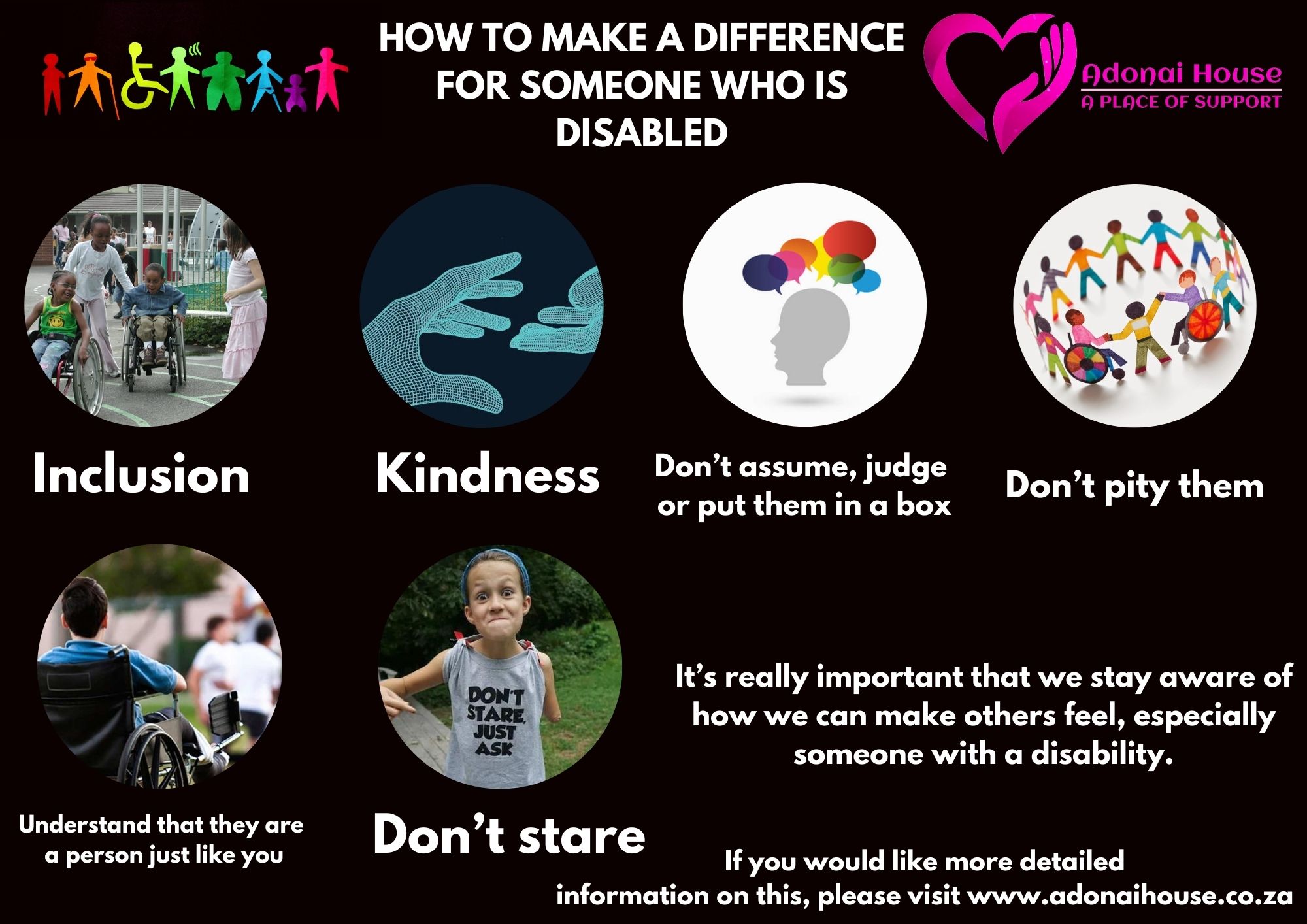
No one likes to be left out on the sidelines watching everybody else have fun. Don’t let anybody be left out, it does not matter who it is. Ask them if they would like to be a part of the activities. If they say no, ask them if they would mind if you sat with them. Engage in meaningful conversation that shows you are genuinely interested in getting to know them as a person.
It doesn’t take a lot to be kind. As they say, everybody has a struggle, and you don’t know what it is. You, me, everybody has struggles in life and a little bit of kindness goes a long way. For a disabled person, their challenges may be more obvious, but that just gives you more reason to be kind.
When we look at somebody and immediately think we know them, we know who they are, we put them into a box. And it robs us, and more importantly them, of the opportunity to really get to know each other.
We all need support, whether it’s a parent, a teacher, a coach or friends, we all need someone to believe in us and our dreams. And it’s the same for people with disabilities. With that support they, just like you and me, are able to achieve the things that are in their hearts.
It’s human nature to look at someone, especially if they have physical challenges, and to feel sorry for them, but we really have to be careful that we don’t allow our pity to make us see them them as “less than”. They are not less than you, or less than capable, they are not less than anything. So, feel sorry for their situation if you must, but don’t pity them, there is a big difference.
When our brains see something we don’t understand or makes us uncomfortable, the curiosity portion of the brain is activated and you’re literally hardwired to keep looking at it until your brain can make sense of what you are seeing, this is very normal. But you absolutely have to put yourself in the other person’s shoes. What would it feel like if you were on the receiving end of the stares and the whispers.
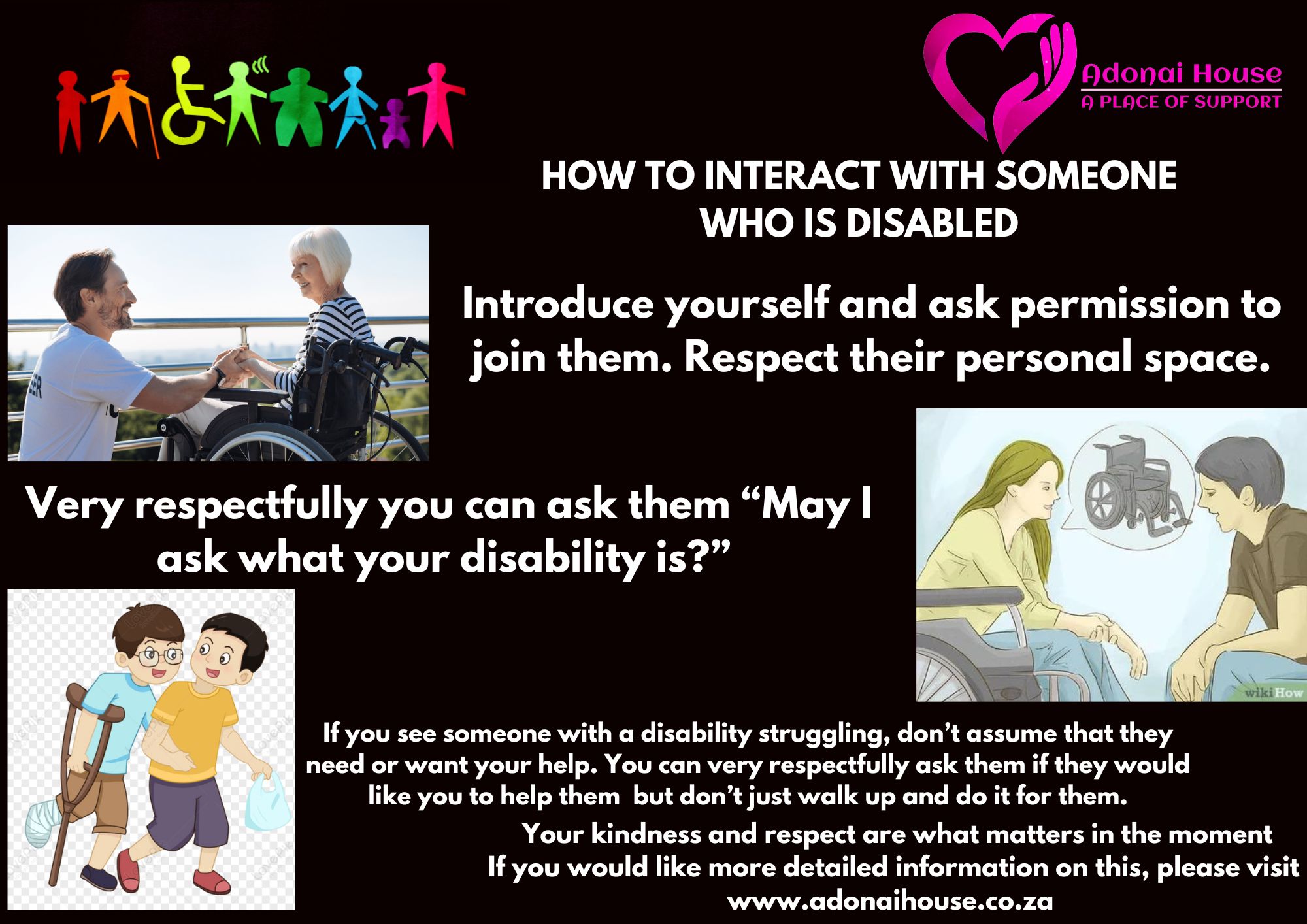
(Hi my name is KC, would you mind if I come sit with you a bit).
Respect is the key and don’t assume that the person is lonely and will be grateful for your company, we want to include, and we want to be kind, but we don’t want to assume anything about that person. So, you always ask before you invade their space. If they welcome you to sit with them, it’s a good indication that this person is looking for someone to chat with and show some interest and have a chance to show their interest in you. Tell them a bit about yourself, so that they can feel comfortable with you.
Don’t ask them “what happened to you” or “what’s wrong with you”. This is a very negative thing, and it actually implies that they have some form of control over their disability. It is so important to be respectful in how you ask. It is ok to ask but do it nicely. And as they tell you about it, you can ask them if it was something they were born with. Again, it just shows your genuine interest in them as a person. You can let your conversation flow further to questions like day to day activities, and how their disability affects their lives, because by now, you will know if they are comfortable or not with discussing their disability. For a lot of disabled people, they just want to have a normal conversation and not always discuss their disability, but most of them understand when they meet someone new, it comes up and they are happy to get it out of the way.
You can very respectfully ask them if they would like you to help them (maybe they are trying to get down the stairs, or trying to put on their jacket) but don’t just walk up to them and do it for them. Most people with disabilities have had to learn how to do things for themselves when no one is there to help them. So, they may be very comfortable doing it themselves, even though it looks like they may be struggling. They have their ways of achieving these physical tasks, so never just step in and assume. We must be aware of personal space. So, never assume and always with kindness and respect, you can ask if they would like some help, but if they say “no thank you”, that’s fine and you move on.
CAPITEC BUSINESS
Branch code: 450 105
Account number: 105 200 5373
Account holder: Adonai House Hannah’s Sanctuary for the Disabled NPC
Use your Cellphone number as a reference so we can acknowledge your donation
Send your proof of payment to kasey@adonaihouse.co.za
SECTION 18A REQUEST FORM
Please fill in all the required fields so that we can issue the Section 18A Certificate
LET US CONTACT YOU
Please fill in all the required fields so that we can issue the Section 18A Certificate
By providing your details you agree to the use of your data as described in our Privacy Policy.